
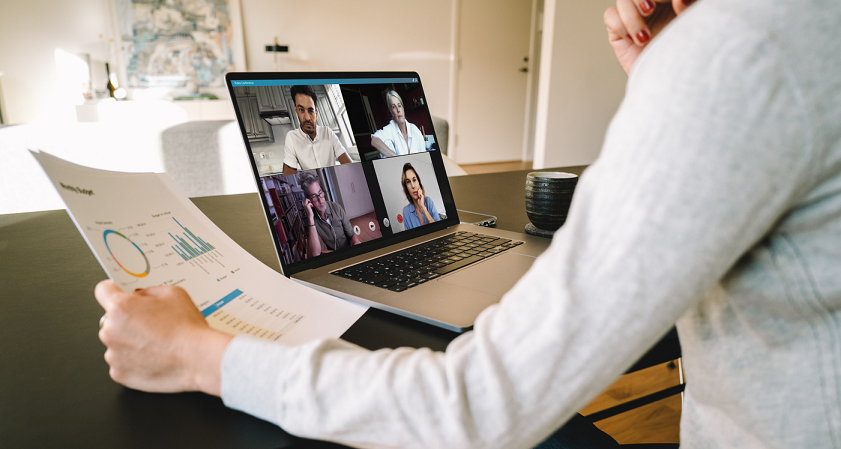
For many employees, remote work has turned into a lifestyle thanks to the benefits it offers, and the flexibility involved made it possible to work from abroad. Besides Romanians who moved their desks to exotic destinations, there are also foreign employees who returned to their home countries during the pandemic while continuing to work for Romanian companies.
“Many telework rules were introduced during the state of emergency and kept in place during the state of alert. Once restrictions are lifted, companies that want to keep this work model must adopt a clear telework policy. After two years of working mainly from home, this setup is no longer seen as a favour but, in some cases, as a condition for staying with the company.”
explained Ioana Dragu, Tax Senior Consultant, Soter & Partners
The cost of remote work from abroad for employers
If employers allow cross-border telework, they need to assess the consequences on income tax, social security contributions, permanent establishment risk, health and safety, reporting obligations abroad and potential immigration formalities.
“When work is performed abroad, the first step is to check whether Romania has a double tax treaty with the host country. Romania signed roughly 90 treaties, so in most cases there is a legal framework to determine which state has taxing rights. If there is no treaty – for example with Tanzania or Mauritius – the employer must consider the risk of double taxation in both Romania and the other state.”
explained Andrei Popescu, Tax Manager, Soter & Partners
Regarding social security, EU Regulation 883/2004 states that contributions cannot be paid simultaneously in multiple member states.
“Employers must review each employee’s situation. Under certain conditions, an employee can remain insured in Romania even if working from another EU member state. To avoid owing contributions in the country of remote work, the employer can request an A1 portable document. Without it, the employee might become liable for contributions abroad, which could force the company to register for social security in that country. If the work is performed outside the EU, the employer must check whether there is a bilateral social security agreement. Without one, contributions may be due in both countries.”
added Ioana Dragu, Tax Senior Consultant, Soter & Partners
Telework abroad and permanent establishment risk
Remote work from another country can trigger additional obligations for employers, including the risk of creating a permanent establishment.
“Having an employee abroad may create a permanent establishment for the company. Telework alone does not automatically trigger it, but the risk has to be evaluated by looking at the employee’s activities and local regulations. The risk increases if the company requires a specific location to be used or if the employee concludes contracts on behalf of the company in another state.”
explained Andrei Popescu, Tax Manager, Soter & Partners
Implementing a telework policy requires a careful review of all these implications to provide employees with a safe, predictable framework. This is especially important because a 2021 Randstad Workmonitor study shows that over 80% of Romanian employees still want more flexibility, signalling that remote work is a trend employers need to accommodate.